
Attic Mold Removal in St. George, LA
Attic mold in St. George usually turns up secondhand: a buyer's inspector photographs a darkened roof deck, a roofer notices fuzz on the rafters while replacing shingles, or a ceiling stain appears under a bathroom fan. The growth almost always traces back to one of a few causes, a leak, an exhaust fan blowing damp air into the attic instead of outdoors, or hot humid air trapped against the underside of the roof. Removing it without fixing that cause only buys a summer. One call to St. George Mold Remediation sets up an independent assessor to look first and a separate contractor to clean the attic and correct the source. Call (225) 285-3983.
Call (225) 285-3983 Request a callback
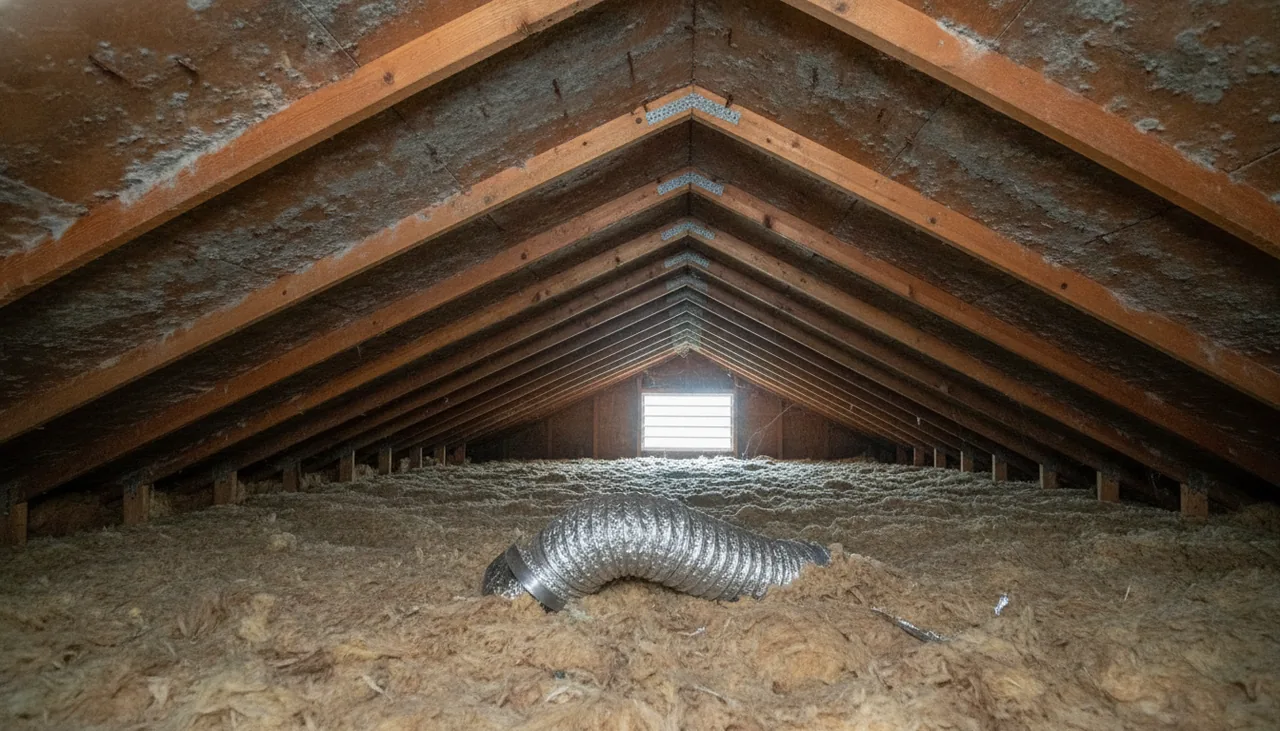
Where attic mold in St. George comes from
An attic is meant to stay close to outdoor conditions and dry out between rains. Mold grows when something keeps the roof deck or the insulation wet for weeks at a time. The usual culprits:
- Exhaust fans that end in the attic. Bathroom fans, and now and then a kitchen hood or dryer duct, that blow into the attic space instead of through a roof or wall cap.
- Roof leaks. Cracked pipe boots, lifted flashing at walls and chimneys, worn valleys and shingles loosened by wind.
- Ventilation that does not move air. Soffit vents buried under blown-in insulation, no baffles at the eaves, a ridge vent that was never cut open, gable vents painted over.
- Cold equipment in a hot attic. Air handlers and supply ducts that sweat in humid attic air, and condensate pans that overflow onto the ceiling. That side of the problem is covered under HVAC mold remediation.
The pattern of the growth usually points at the cause. A dark patch right above a bathroom is the fan; a stain shaped like a trickle down the rafters is a leak; an even grey film across the cooler, shaded side of the roof is ventilation.
The local climate makes each of these worse.
Highs at Baton Rouge Metropolitan Airport reach 90°F or more on about 96 days a year, about 70 of them in June through August, and the summer average high is 91.5°F (NOAA 1991-2020 normals). An inch or more of rain falls on about 19 days a year, so a roof deck is soaked and baked by turns for most of the summer.
Roof leaks after storms and the attic mold that follows
A storm that lifts shingles or tears flashing can leave a leak that only shows in wind-driven rain. The water runs along the underside of the deck, soaks into batt or blown-in insulation and sits there, pressed against the ceiling drywall. Because the attic is closed and the summer heat holds the moisture in, wood that took water in a single storm can stay damp long enough to grow.
The order after a storm matters: the roof is dried in or tarped, the wet insulation is pulled back so the deck and ceiling can dry, and the attic is looked at again a few weeks later, before anyone assumes the roofer's repair settled it. A dated photo of the damage and the roof repair invoice belong in the claim file, because wind damage is a homeowners claim while growth from a slow, older leak usually is not.
Storm history matters when a roof is inspected or a claim is opened.
East Baton Rouge Parish has been included in 17 major disaster declarations since 2000 for hurricanes, floods and severe storms, Hurricane Francine in 2024 among them (FEMA). Hurricane Gustav brought a 79-knot gust to the airport in 2008, and when Hurricane Ida passed in 2021 the airport logged a 55-knot gust while a gauge on Highland Road inside St. George caught 3.32 inches of rain.
Bath fans venting into the attic: a common attic mold source
Every shower sends warm, wet air up through the exhaust fan. When the fan duct stops at the attic floor, or a flexible duct has slipped off a roof cap, that moisture lands on the deck boards and nails directly above, day after day. The growth that results tends to be heavy and concentrated, and cleaning it without rerouting the duct means paying for the same cleaning again within a year or two.
The correction is simple: an insulated, sealed duct run to a dedicated roof or wall cap, so the air leaves the house and the duct itself does not sweat. It costs a few hundred dollars and belongs in the protocol, not on a list for later.
How attic mold removal is done, and who does each part
Louisiana does not let the company that diagnoses mold on a property also remove it. La. R.S. 37:2158(A)(23) bars a remediation contractor from doing both the assessment and the remediation on the same property, or from owning part of both firms. In an attic that works out as follows.
The independent assessment covers moisture readings on the deck and framing, a look at every fan, vent and roof penetration, and a protocol that names the cause, the area to be cleaned, the insulation to be removed and the ventilation corrections.
A separate remediation contractor then seals the attic hatch and ceiling openings with plastic, keeps the attic under negative air through a filtered machine, bags and removes contaminated insulation, and cleans the deck and rafters by filtered vacuuming, sanding or media blasting. Staining that remains after cleaning is not live growth; where the protocol calls for it, the cleaned wood is sealed with a coating made for the purpose. The fan, leak or vent problem is corrected and new insulation goes in once the wood reads dry.
A clearance check by someone outside the contractor's firm closes the job. St. George Mold Remediation books all three and does not do any of them; it is the phone line that keeps them apart and the paperwork together. The assessment is described on the mold inspection page.
Selling a house with attic mold staining
Roof deck staining is a familiar photo in a buyer's inspection report, and it tends to arrive with a short inspection period attached. The buyer wants to know two things: is the growth still active, and has the cause been fixed.
A fresh coat of paint or a spray-on coating over the boards does not answer either question, and it can make the seller's disclosure harder to stand behind. What does answer them is a written assessment that says what is active and why, a remediation record if work was needed, and a clearance result from a firm other than the contractor. Louisiana sellers fill out a property disclosure, and known mold or water problems belong on it; an agent or attorney can say how to word yours. Buyers can ask for the same three documents before the inspection period closes.
Attic mold removal cost in St. George
- Attic assessment with a written report, done first: $300 to $600.
- Cleaning and treating the roof deck and framing across a whole attic: $2,500 to $8,000, moved by the deck area, the pitch and access, and how much insulation comes out and goes back.
- Clearance check once the attic work is finished: $200 to $400.
Rerouting a fan runs a few hundred dollars; roof repairs and new ventilation are priced by the trades that do them. These ranges come from past St. George attics and are not a quote for yours; the remediation contractor quotes in writing from the protocol. The attic ranges also sit on the cost page beside every other job type.
Calling about attic mold
When you call (225) 285-3983, it helps to have the inspection report photos if there are any, the age of the roof, any leak or storm damage you know of, where the attic access is, and the closing or inspection-period date if a sale is under way. The office works Monday through Friday from 8 in the morning to 6 in the evening and Saturday from 9 to 2, and the phone is answered outside those hours as well, which helps when a sale deadline is close. If you prefer to write, use the callback form below or the contact page.
Attic mold questions St. George owners ask
How much does attic mold removal cost in St. George?
A whole attic usually runs $2,500 to $8,000, depending on deck area, access and how much insulation is replaced. The assessment, $300 to $600, comes first. Call (225) 285-3983 with the size of the house and where the attic hatch is.
Does staining on the roof deck mean the mold is still active?
Not always. Old staining from a leak that was fixed years ago can be inactive, while a fresh film above a bathroom fan usually is not. Moisture readings and a look at the cause settle it. Call (225) 285-3983 to book an assessment that answers it in writing.
My bathroom fan blows into the attic. Is that the cause?
Very often. A shower's worth of damp air lands on the same boards every day. Cleaning without rerouting the duct to a roof or wall cap tends to need repeating. Mention the fan when you call (225) 285-3983 so the assessor traces its path.
Does homeowners insurance cover attic mold?
Sometimes, when it follows a sudden covered event such as wind damage to the roof, and often with a cap. Growth from fan venting, poor ventilation or a long-running leak is usually excluded. Keep the storm date and the roof invoice ready and call (225) 285-3983.
Do I have to disclose attic mold when I sell?
Known mold and water problems belong on a Louisiana seller's property disclosure, and your agent or attorney can advise on wording. An assessment, the remediation record and a clearance result make the answer easier to give. Call (225) 285-3983 to have an independent assessment in hand before listing.
I rent out the house. Who handles attic mold, the landlord or the tenant?
The roof, the fans and the attic are part of the building, so the owner normally handles them, while the tenant reports leaks and stains in writing. Either can call (225) 285-3983, and the owner approves the protocol before work starts.
Request a Callback
Writing it down suits some people better, and so does sending it after office hours. Put the details in here and a phone call comes back to you.
Talking it through instead? (225) 285-3983 picks up day or night; give the street address and what is wrong, and someone rings you back.
Stains on the roof deck?
Call (225) 285-3983. The leak or vent problem is found first, then a separate crew prices the cleaning.
Call (225) 285-3983